
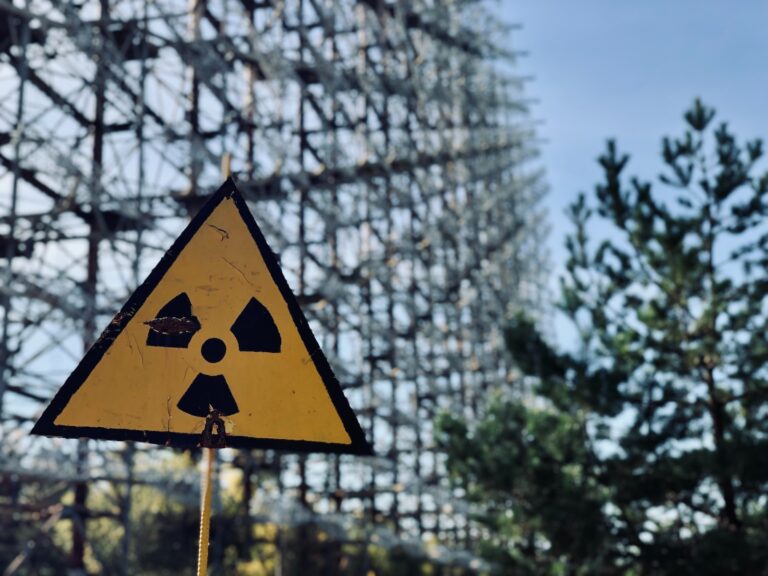
There are three types of nuclear radiation: alpha particles, beta particles, and gamma rays.
Alpha particles: These are positively charged particles made up of two protons and two neutrons. They are relatively large and heavy compared to other types of radiation, which means they don’t travel very far through air or other materials. However, they can be very damaging if they are ingested or inhaled.
Beta particles: These are negatively charged particles that are much smaller and lighter than alpha particles. They are made up of high-energy electrons that are emitted from the nucleus of an atom during radioactive decay. Beta particles can travel farther than alpha particles and can penetrate materials such as clothing or skin.
Gamma rays: These are high-energy photons, similar to X-rays, that are emitted from the nucleus of an atom during radioactive decay. They are the most penetrating type of radiation and can travel through thick materials, including concrete and steel. Gamma rays can be very damaging to living cells and tissues.